

Key Takeaways
- Surface preparation is the most critical step — a clean, damp wall ensures a strong, lasting bond
- Mortar consistency and mix ratio directly determine the durability of your brick installation
- Marking guidelines before you start prevents costly mistakes and uneven rows
- Allow 24–48 hours curing time — rushing this step is the most common cause of installation failure
- Brick slips can be installed over existing plastered walls with no structural changes
Laying bricks correctly is not just about placing one on top of another — it is a systematic process that, when followed properly, results in a wall that is structurally sound, visually precise, and built to last for decades. Whether you are installing full-format structural bricks, cladding bricks on an exterior facade, or thin brick slips over an existing wall, the same fundamental principles apply. This guide walks you through each step in detail so you achieve a professional result every time.
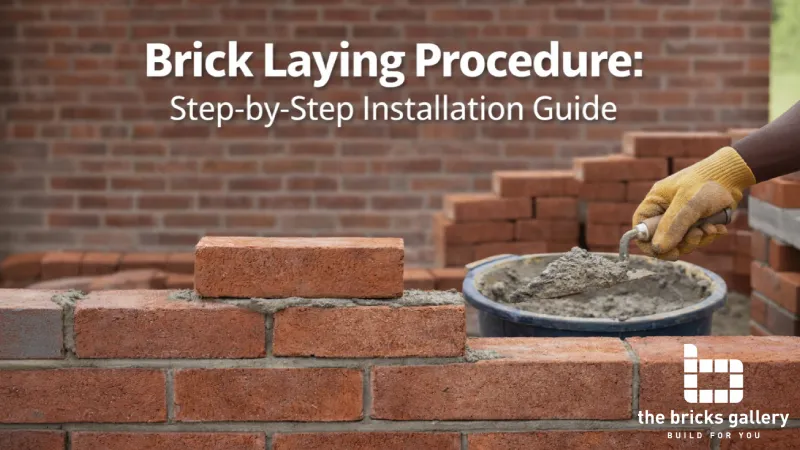
Brick Laying Procedure: Step-by-Step Installation Guide
Step 1: Surface Preparation
Clean the wall surface thoroughly, removing all dust, loose particles, old paint, and debris. Any contamination between the substrate and the mortar will compromise adhesion and lead to bricks coming loose over time. For exterior walls, check for damp patches or efflorescence and treat them before proceeding.
Dampen the surface with clean water before applying mortar or adhesive. This prevents the substrate from drawing moisture out of the mortar too quickly, which would weaken the bond. Ensure the wall is structurally sound and free from cracks — if cracks are present, they must be filled and cured before brick laying begins.
Step 2: Mortar / Adhesive Mixing
For structural brick walls, mix cement mortar in a 1:4 ratio (one part cement to four parts clean sharp sand). Add water gradually and mix to a thick, consistent paste that holds its shape when squeezed. For cladding bricks and brick slips on existing walls, use a ready-made polymer-modified brick tile adhesive which offers better flexibility and adhesion.
Prepare only the quantity you can use within 30 minutes to prevent the mix from stiffening before use. Hot weather speeds up setting time — in summer, work in smaller batches and keep the mix covered between uses. Never add extra water to re-temper mortar that has begun to stiffen as this significantly reduces its final strength.
Step 3: Marking and Layout
Mark horizontal and vertical guidelines on the wall using a spirit level and chalk line before placing a single brick. Start from the bottom corner and plan your layout upwards, accounting for joint spacing. A dry run — laying bricks without mortar first — helps you identify any awkward cuts before committing.
For large walls, establish a datum line (a perfectly level horizontal reference) using a laser level or long spirit level. All subsequent rows reference this line. Getting this step right is the difference between a wall that looks professional and one that visibly drifts — errors compound over every row.
Step 4: Brick Application
Apply mortar or adhesive to the back of each brick using a notched trowel, covering the full face evenly. Press each brick firmly onto the wall following the guide lines, using a slight twisting motion to ensure full contact and eliminate air pockets. Use plastic spacers to maintain consistent joint gaps of 8–10mm between bricks.
Check alignment with a spirit level after every two or three rows — do not wait until the end to discover a drift. Tap bricks gently with a rubber mallet to adjust position. Remove excess mortar that squeezes out of joints immediately with a pointing tool or damp cloth before it begins to set.
Step 5: Joint Filling and Pointing
Once the adhesive has achieved initial set (typically 2–4 hours, check manufacturer guidance), fill the gaps between bricks with pointing mortar using a pointing tool, mortar gun, or grout bag. Work systematically from top to bottom to avoid dripping mortar onto completed joints below.
Strike the joints to a neat, consistent profile — a slightly recessed or flush joint is the most common choice. Remove spacers before grouting and ensure all voids are fully filled. Brush off any dry mortar crumbs with a stiff brush once the pointing has hardened but before it has fully cured.
Step 6: Cleaning and Curing
Clean excess mortar from the brick surface with a damp sponge while it is still fresh — dried mortar is significantly harder to remove. For stubborn mortar smears, a diluted brick cleaning acid (used strictly according to the manufacturer's instructions) can be applied after full curing.
Allow a minimum of 24–48 hours curing time before exposing the wall to weather or applying any sealant. Do not disturb or load the bricks during this period. For exterior installations in the monsoon season, protect fresh brickwork with a tarpaulin for at least 24 hours after laying.
Do's and Don'ts of Brick Laying
Following these best practices significantly reduces the risk of installation failure and ensures a long-lasting, professional result:
Do dampen bricks before use — this improves bonding with mortar and prevents premature moisture absorption that weakens the joint.
Do use consistent mortar thickness — 8–10mm joints throughout the wall. Variation in joint thickness is immediately visible and structurally weaker.
Do check alignment regularly — use a spirit level after every two or three rows, not just at the end.
Do allow full curing time — 24–48 hours minimum before weather exposure or loading.
Do not use dry bricks — they absorb moisture from the mortar too quickly, dramatically weakening the bond strength.
Do not over-apply mortar — excess mortar causes uneven surfaces, wastes material, and makes cleaning significantly harder.
Do not rush curing — exposing fresh brickwork to heavy rain within the first 24 hours washes out cement and causes permanent weakness.
Do not ignore expansion joints — on large wall surfaces exceeding 6 metres, include vertical expansion joints every 4–6 metres to accommodate thermal movement and prevent cracking.
Conclusion
A well-executed brick installation is the foundation of a wall that looks exceptional and performs reliably for decades. Each of the six steps outlined above builds on the last — skipping or rushing any stage compromises the entire installation. Whether you are a homeowner tackling a feature wall or a mason working on a large exterior facade, this procedure applies consistently across all brick types and applications.
At The Bricks Gallery, we supply bricks with detailed installation guidance for every product. Contact our team for product-specific laying advice or to request free samples before your project begins.
FAQs
Brick Laying Installation Guide Brick Mortar Cladding Bricks Brick Slips Surface Preparation Brick Pointing DIY Brickwork Facade Installation How-To